
Ingredients (scaled)
1 servings
Directions
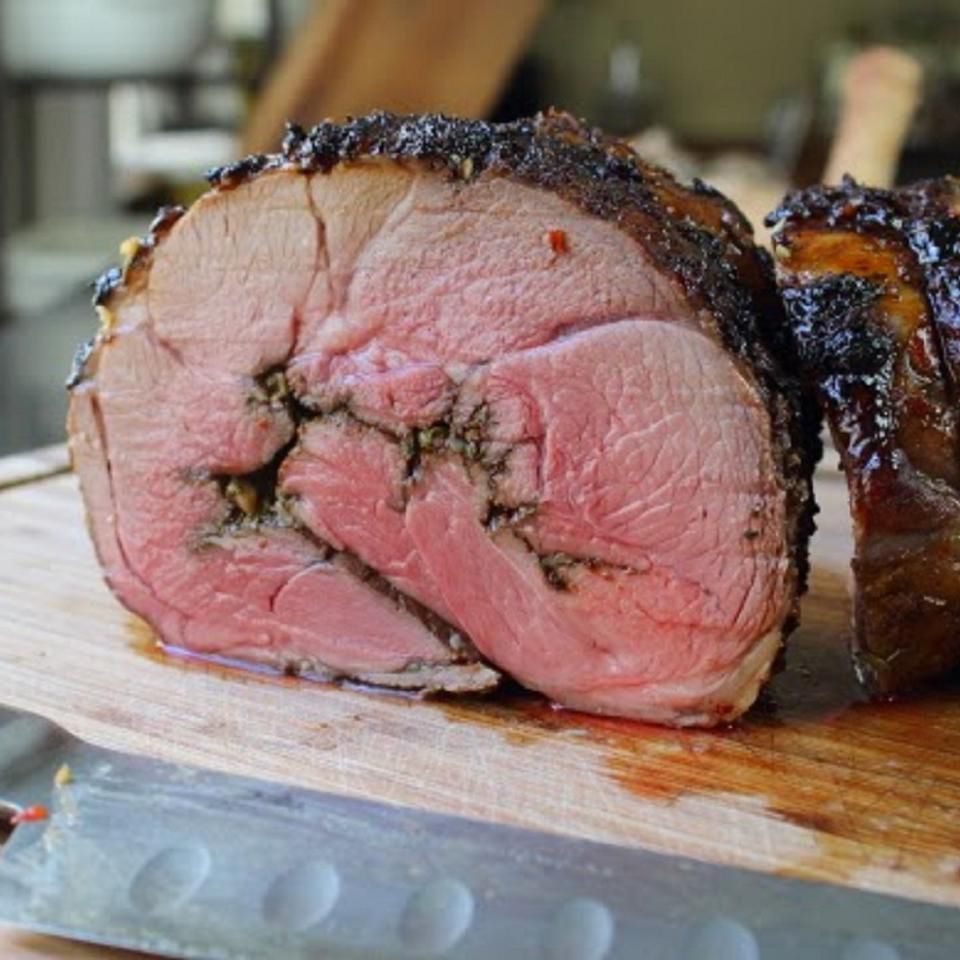
Cuts: Leg of lamb, always cut from the rear legs, is sold in different forms. Whole leg of lamb: Usually untrimmed, the leg still has the shank and hip bones attached. The butcher will trim the fat, remove the hip bone, and crack the shank. After trimming, it should weigh 5 to 8 lbs.. Shank end or sirloin end: A whole leg of lamb can be cut in two, creating two roasts. The shank end is smaller, and the sirloin end is meatier. Each will feed about six people. Boned leg of lamb: A whole leg from which the fat and bones have been removed. It is shaped like a football and weighs between 3 and 6 lbs.. With or without stuffing, it is excellent roasted. Butterflied leg of lamb: Ideal for broiling and grilling, this boned leg has been trimmed and cut into an even thickness. Purchasing and Storing: Most lamb sold in supermarkets is graded Choice. Some butchers carry Prime, a higher grade. Generally, the younger the lamb, the better its taste. Look for lamb that is bright pink with small streaks of marbling throughout. The fat should be white and firm. Wrap lamb tightly and refrigerate; use within two or three days. Its flavor and texture will be better if it is not frozen. Cooked lamb will keep in the refrigerator for two or three days. Preparation: Allow 1/4 to 1/3 lb. boneless leg or 1/2 lb. bone-in per person. Bring lamb to room temperature before cooking. Roasting in the pan rather than on a rack produces richer juices. Lamb tastes best rare. To check doneness, insert an instant reading meat thermometer into the thickest part of the roast, avoiding bone or fat. Since the internal temperature will continue to rise after the lamb is out of the oven, remove the meat when its temperature is a few degrees lower than desired: rare, 130°to 135°; medium, 145°; well-done, 155°. Let it stand 10 minutes before carving. lamb 01
Notes
Click to add notes...
Nutrition Facts (per serving)
Calories
g
Protein
g
Carbs
g
Fat
g
Fiber
g
Sugar
mg
Sodium
mg
Cholesterol