
Best in: Spring, Summer, Fall, Winter
Fresh: ripe fruit
Ingredients (scaled)
1 servings
Directions
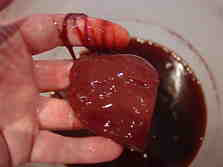
Take your corked or leftover wine (red is most common, but you can use white), and add a splash (tablespoon) of red wine or apple cider vinegar. Re-cork the bottle and put it somewhere dark and warm to encourage the bacteria to attack residual sugar in the wine and start the fermentation process. Temperature is not entirely crucial, but a good rule of thumb is: if you are comfortable, the MOV will be too. You want to ensure that light does not hit the bottle, as this will slow fermentation. This takes about 2 months. Be sure to leave the bottle totally undisturbed, so dont move or check on it during fermentation or the process wont work. Slowly pour the contents of the bottle into bowl. Mother, when she is ready, is not very pretty. It should have bacteria strands in it, and be a bit gloppy. There will also be some vinegar here that you can filter out with a fine sieve or coffee filter into another bowl to transfer to bottle. But dont throw any sludge away, this is your starter, your Mother. While not particularly appetizing, it is not harmful; just a bacteria chain hungry for your leftovers. Now that you have your MOV, youll want to feed it to make regular vinegar. Transfer your culture to a storable container with a wide mouth, like a crock or glass beverage container with a spigo. Stainless steel is OK to use, but tin and aluminum are not; plastics are not encouraged. In the container, combine with your MOV some fruits that might be on the way out - berries, apples, pears and pit fruits are all good choices, even tomatoes. Whatever you add will contribute to the overall flavor, so be mindful that while a banana will make the entire batch bannanariffic and somewhat overwhelming, an overripe mango might be more your speed. Now add enough liquid (an inexpensive bottle of wine, or the dregs of the half finished glasses of wine youve been saving in your refrigerator) to cover the fruit youve given Mother. You can also use fresh fruit juices in addition to the wine. Store bought bottle juice is not a good idea as it has preservatives that inhibit fermentation. Be sure the container is covered but can breathe (one idea is to securely replace the lid with cheesecloth), and put the mix in a warm dark place once again, checking on it every week. Continue to add liquid as needed. A bit of scum will form on top as the process continues. Just scrape it off before you add more to the mix. Again, this is not harmful, its just the bacteria creating its own perfect environment. Note: When you add liquid, your vinegar will be diluted until the bacteria can catch back up, so if youre in the mood for the sharp stuff, youll have to give the mix some time. I recommend tasting at 6 weeks and going from there. Once the vinegar is to your liking, pour from the spigot and bottle it in small, sterilized, airtight vessels. Or if your container has spigot envy, just ladle and strain, then bottle. If you dont want the sediment, filter again with a fine sieve or coffee filter. If you wish to pasteurize the vinegar (render the acetobacter inactive), you can heat it at 150?F for a half hour in a clean pot - then you dont have to worry about an airtight container. You can also add fresh herbs to the bottles if you like. This will not only make your vinegar look pretty, but infuse it with the yummy herb flavor. Your Mother will continue to work and grow as you add to it. At some point youll have more mother than room for vinegar. Heres the rub: you can share! Scrape some into a container and give some to your friends. This provides you the room needed to begin another batch and helps your friends with their own mother of vinegar.
Notes
Click to add notes...
Nutrition Facts (per serving)
Calories
g
Protein
g
Carbs
g
Fat
g
Fiber
g
Sugar
mg
Sodium
mg
Cholesterol